

How Robotics and Automation Are Transforming the Solar Street Light Manufacturing Industry
2026-06-17
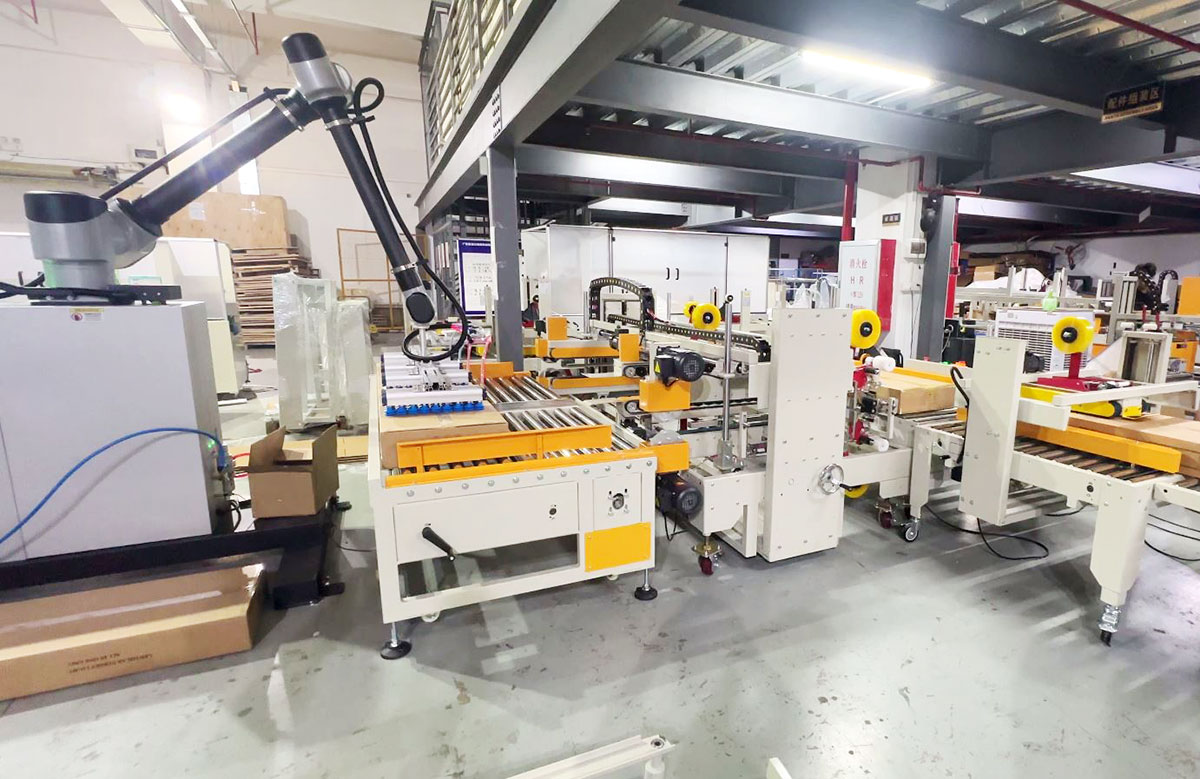
In recent years, China's rapid advancement in robotics and intelligent manufacturing has significantly reshaped the industrial landscape. The solar street light industry—once highly dependent on manual labor and semi-automated processes—is now entering a new era of smart, scalable, and highly consistent production.
At Gohui Lighting, we are witnessing this transformation firsthand. Automation is no longer a future concept; it is becoming a core driver of competitiveness across the entire manufacturing chain.
Traditional solar street light manufacturing involves multiple labor-intensive processes, including metal cutting, welding, surface treatment, assembly, and system integration.
With the introduction of industrial robots and automated production lines, these processes are becoming:
More standardized
More precise
More efficient
Robotic welding ensures structural consistency of lamp poles. Automated coating systems improve corrosion resistance and surface uniformity. Intelligent assembly lines reduce human error and increase production stability.
As a result, manufacturing is shifting from “experience-based production” to “data-driven and system-controlled manufacturing.”
Automation significantly improves production speed and capacity. Factories equipped with intelligent systems can operate continuously with minimal interruption, enabling:
Shorter production cycles
Faster response to large-scale project demands
More stable delivery schedules
For global infrastructure projects, especially highway lighting, municipal engineering, and overseas installations, this reliability is critical.
At Gohui Lighting, automation allows us to better support large-volume international projects with consistent quality and predictable lead times.
One of the most important benefits of automation is the elimination of human-induced variability.
In solar street light systems—where outdoor durability is essential—consistency directly impacts long-term performance. Automated manufacturing ensures:
Uniform welding strength
Stable electrical assembly quality
Consistent surface treatment and anti-corrosion performance
Reduced defect rates across batches
This translates into higher reliability in real-world applications, particularly in harsh environments such as deserts, coastal regions, and high-humidity areas.
As automation becomes more widely adopted, the competitive structure of the solar lighting industry is also changing.
Face increasing pressure from rising labor costs
Struggle to match automated quality consistency
Risk being excluded from large infrastructure projects
Benefit from economies of scale
Gain stronger quality control capabilities
Strengthen their position in global engineering markets
This shift is accelerating industry consolidation and raising the overall entry barrier for high-standard projects.
Automation also drives changes beyond the factory floor.
To better adapt to intelligent production systems, solar street light products are evolving toward:
Modular design (lamp heads, battery systems, controllers)
Standardized components
More efficient assembly integration
At the same time, supply chain coordination is becoming tighter and more data-driven, improving overall responsiveness and quality control.
For Gohui Lighting, automation is not just a production upgrade—it is a strategic transformation.
We are continuously investing in:
Smart manufacturing equipment
Automated welding and coating systems
Integrated quality control processes
Standardized production management systems
Our goal is to build a manufacturing system that combines efficiency, precision, and long-term reliability, ensuring that every solar lighting solution we deliver meets global engineering standards.
The rise of robotics and automation is fundamentally redefining the solar street light manufacturing industry.
It is transforming production from labor-intensive operations into a highly controlled industrial system driven by precision, efficiency, and scalability.
For companies like Gohui Lighting, this evolution represents not only a technological upgrade—but also a long-term commitment to delivering higher-quality, more reliable, and more sustainable lighting solutions to the global market.
Product
Project
About
Contact us
7F,Bldg. A,Hytera Park,3 Baolong 4th Rd,Longgang,Shenzhen,China